Manta Ray Night Swim
What is this MAGIC? You will ask after a MANTA NIGHT SWIM.
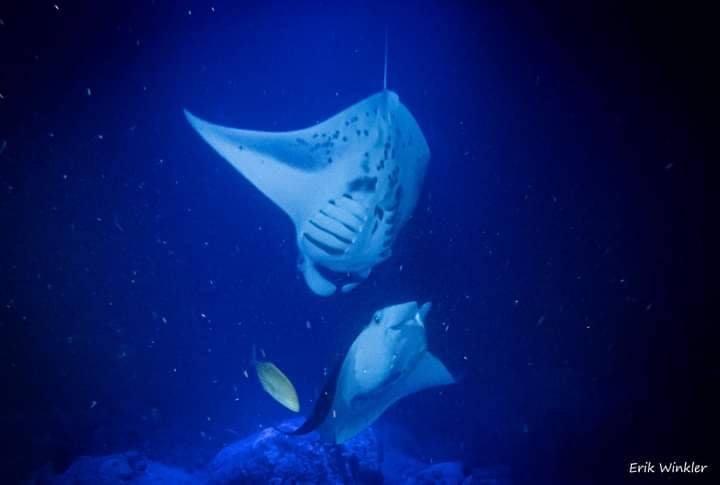
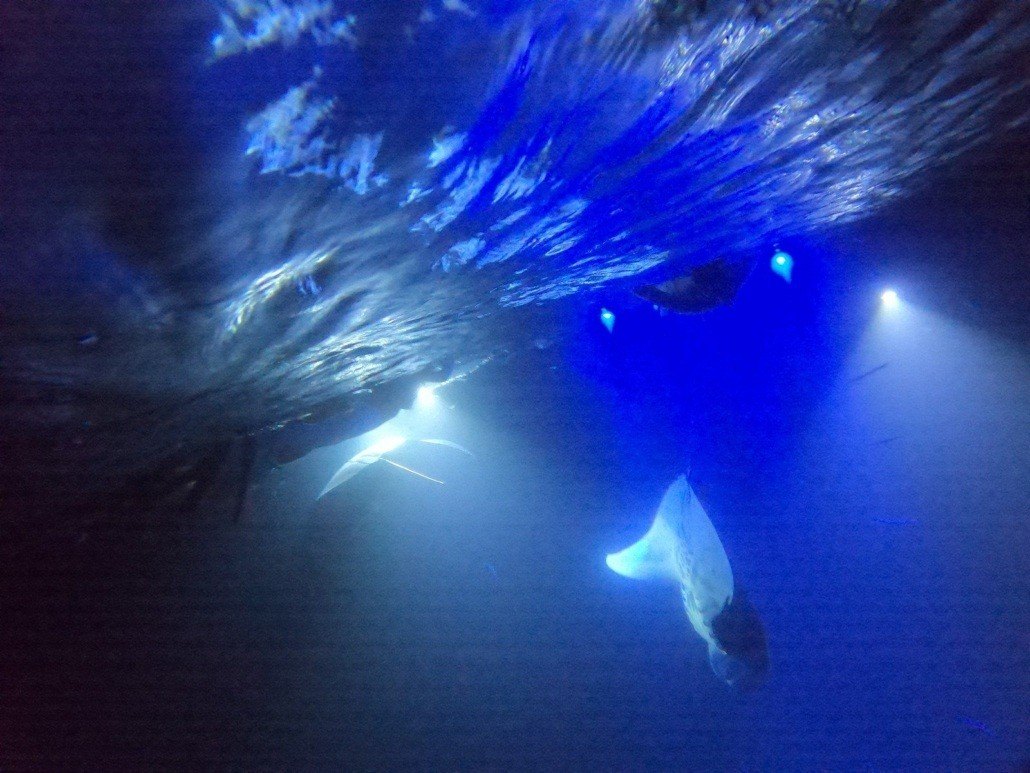
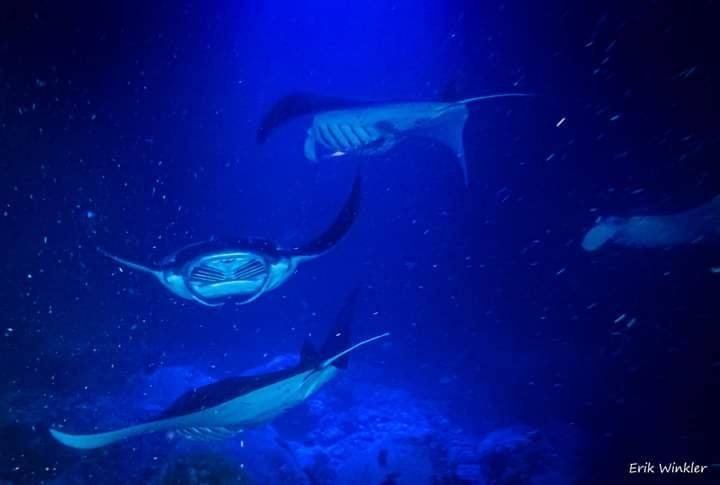
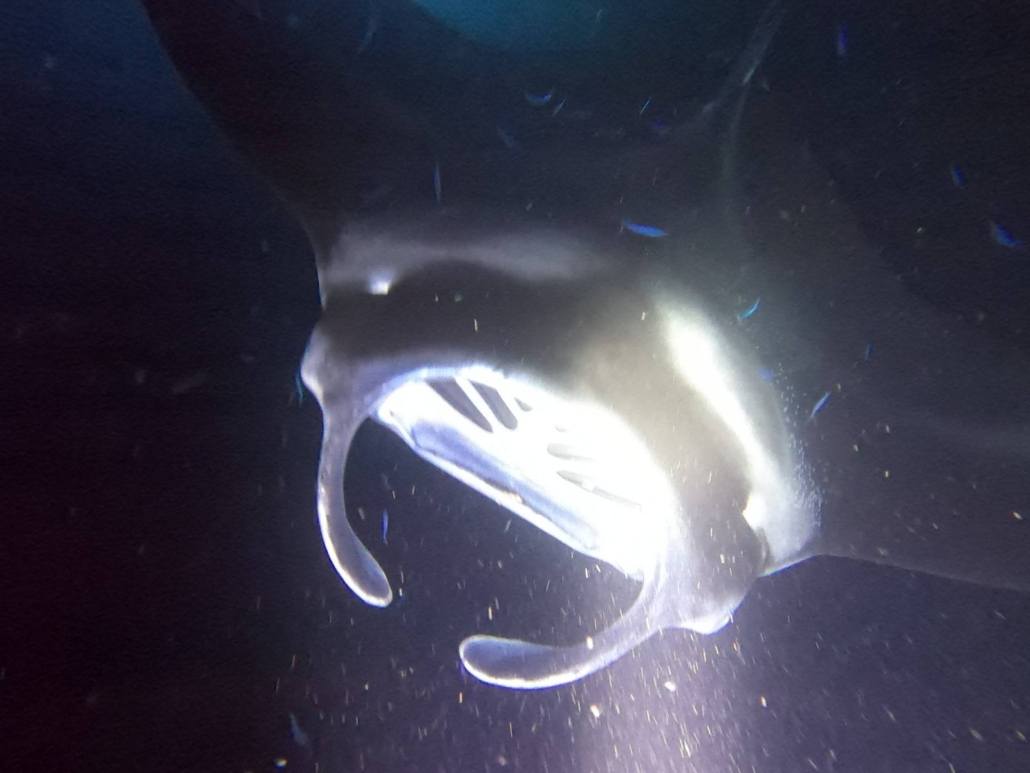
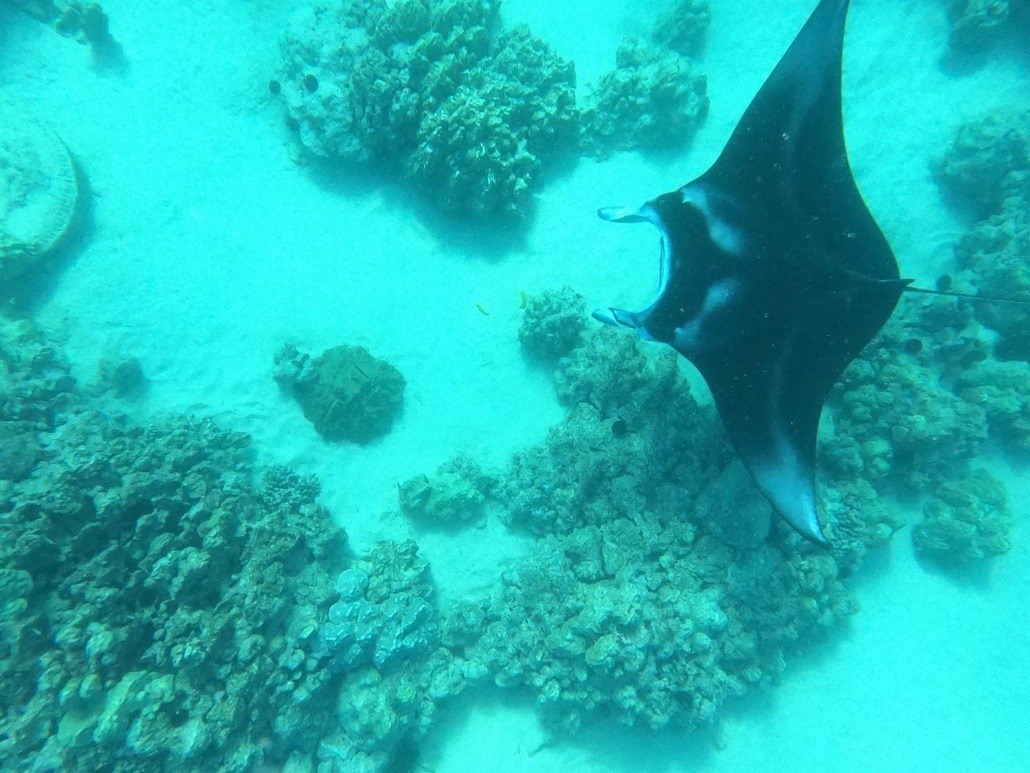
Kona has a unique wonderfully majestic underwater ballet performance by the gentlest giants of the sea. This extremely special experience is unique to Kona and we are delighted to share it with you. Please join us for a Barrel rolling, Plankton eating, Dance party display in the water with MANTA RAYS for a MANTA NIGHT SWIM experience you will never forget.
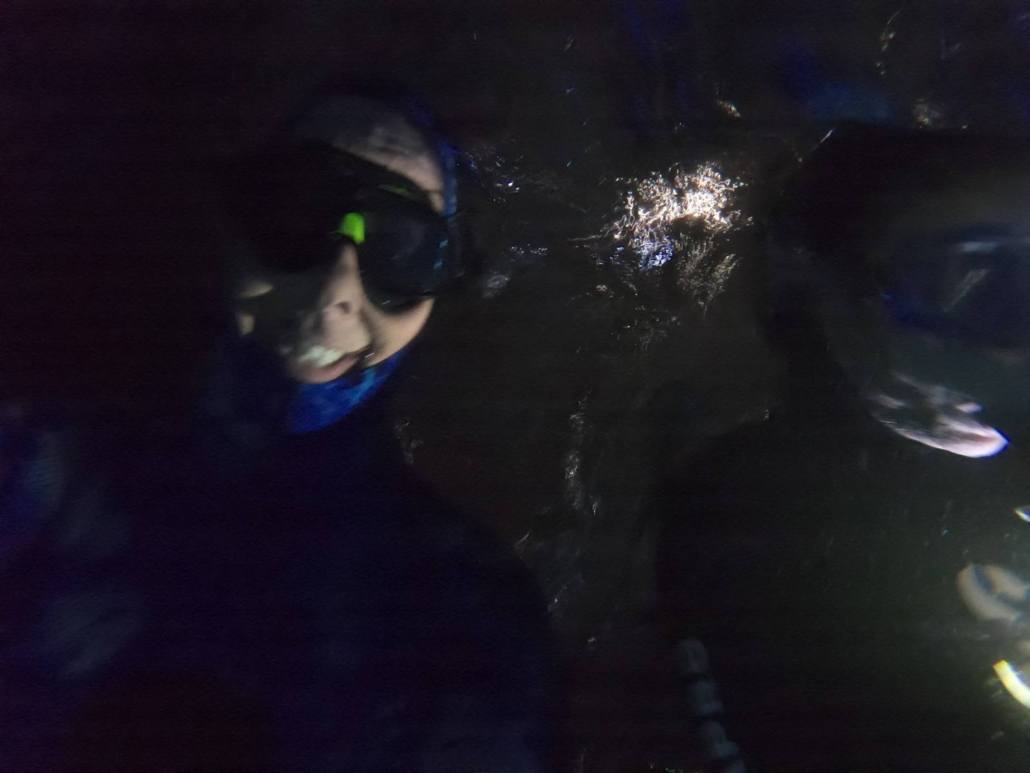
First we will teach you about Human SAFETY. This can be a dangerous adventure if you are unqualified or unprepared. Safety is first staying with our group and 10 feet away from other groups respecting all Floaters and Boats and Lifeguards in the water.
Second we teach you about MANTA RAY SAFETY as guests in the Ocean where the Manta Rays are home. Please do some research at www.MantaPacific.org and fall in love with these amazing animals before we SWIM with them. Manta Rays are WONDERFUL and deserve to be protected and respected, especially by us who frequent their feeding grounds. They eat plankton and spend most of their lives grazing for food. When we offer lights at night, we attract the plankton and the Manta Rays are attracted to that. We have a responsibility to DO NO HARM to the Manta Rays. They are not capable of hurting us as they have no teeth, no stinger or barb, and no apparent ill will. Manta rays are nobody’s predator and nobody’s prey. They exist with a peaceful essence that we want for the whole world.
Finally, we try to emulate them with a quiet and gentle tone all the while respecting the elements of danger swimming at night in the ocean.
PREREQUISITE: In order to qualify for a MANTA NIGHT SWIM, we need to know you can SWIM.
You must join us first for a day SWIM with SNORKEL SWIM or ADULT SWIM SCHOOL, or even SWIM LESSONS. We will be swimming about a half-mile at night. A MANTA NIGHT SWIM requires that you are Ocean Confident and capable of the SWIM. We will not put you in a boat and drop you in water for an observation experience. You will SWIM out to the MANTAS in a SAFE and Responsible way and SWIM WITH THE MANTA RAYS. They are so curious and wonderful. Join us for a MANTA NIGHT in Kona that you will never forget and Mahalo for your Kokua.
MANTA NIGHT SWIM AGREEMENTS: PLEASE SIGN ALL!!!
____ I agree to never touch, chase, or harm a Manta Rays.
_____I agree to visit www.MantaPacific.org before our swim.
_____I agree to Love and protect all Manta Rays forever!
FUN FACTS ABOUT MANTA RAYS IN KONA:
HISTORY of the Manta Ray Tours:
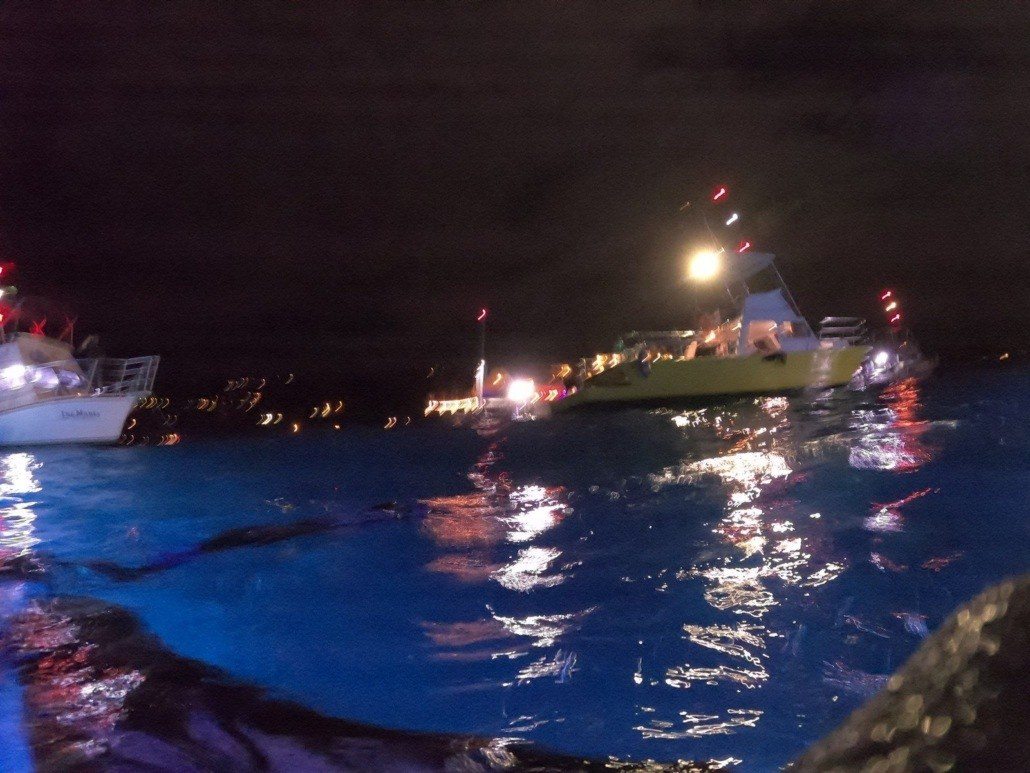
About 30 years ago the restaurant outside the Sheraton Hotel put lights in the water for guest ambiance and Manta Rays were quickly attracted. Soon locals were throwing you in a floaty with a flashlight, and the Kona Manta Ray Tours began. Now we have 30 plus boats in the waters around Kona touring Manta Ray Observation Snorkeling experiences in two different locations. When the boats introduced boards with lights for observation, the Manta Rays developed a new behavior. They started barreling under the boards to collect the plankton attracted by our lights. There are Manta Rays all over the world, but the barrel roll is a learned behavior at one time unique only to Kona Manta Rays, further proving high levels of cognitive activity. Kona Manta Rays are very special.
TERRITORY:
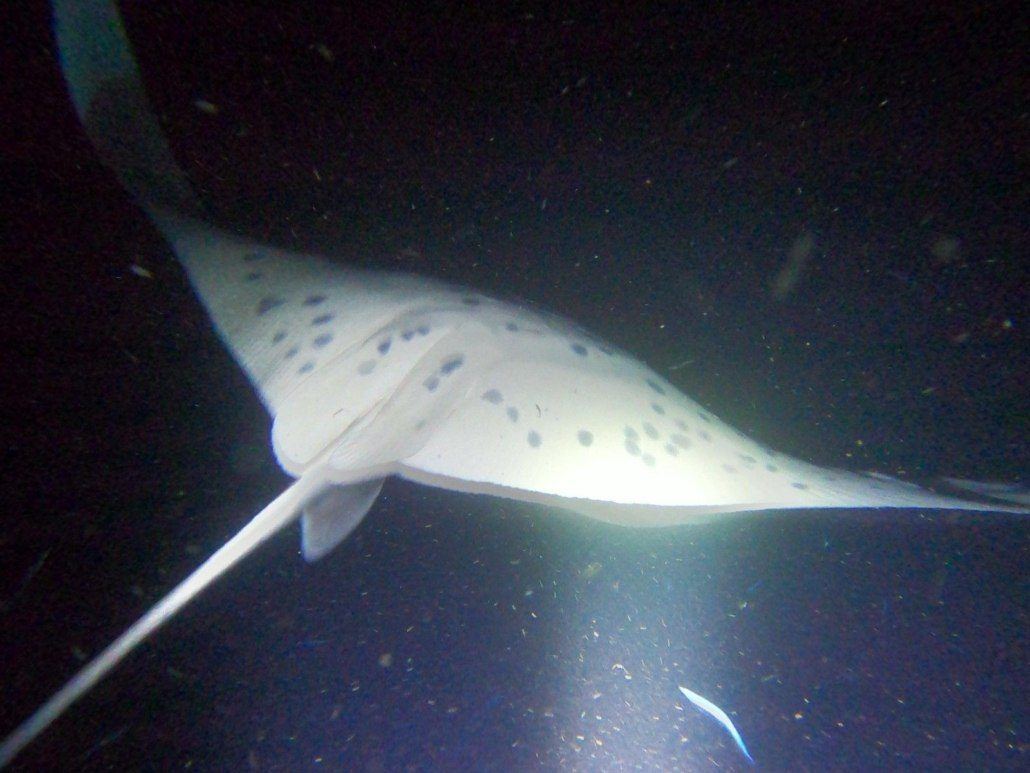
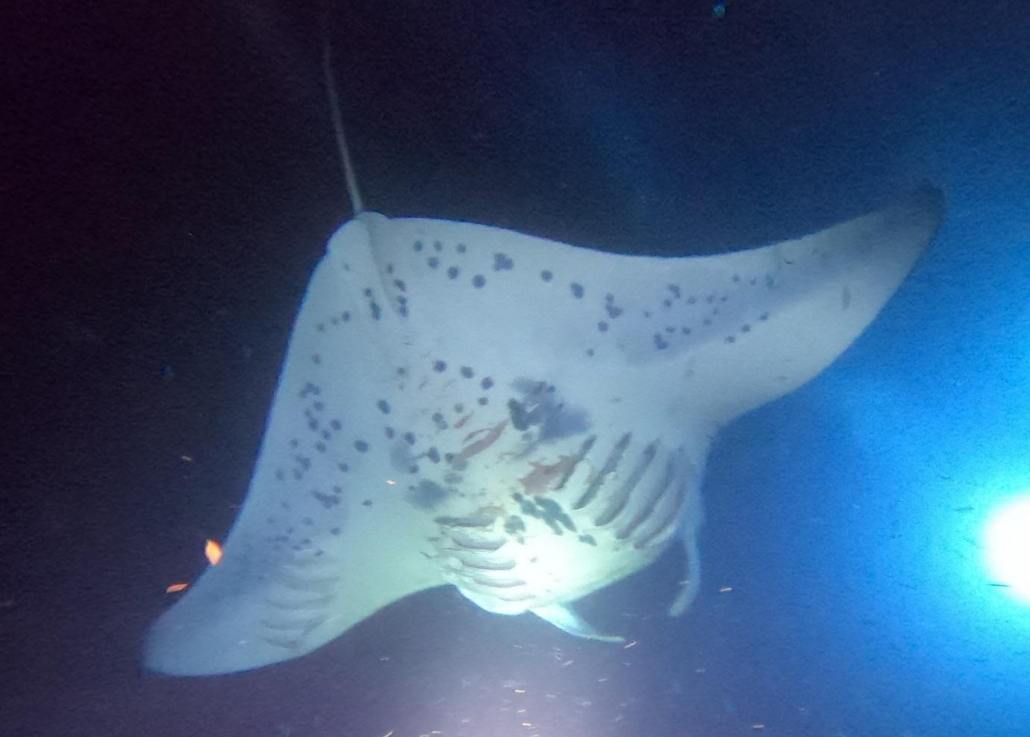
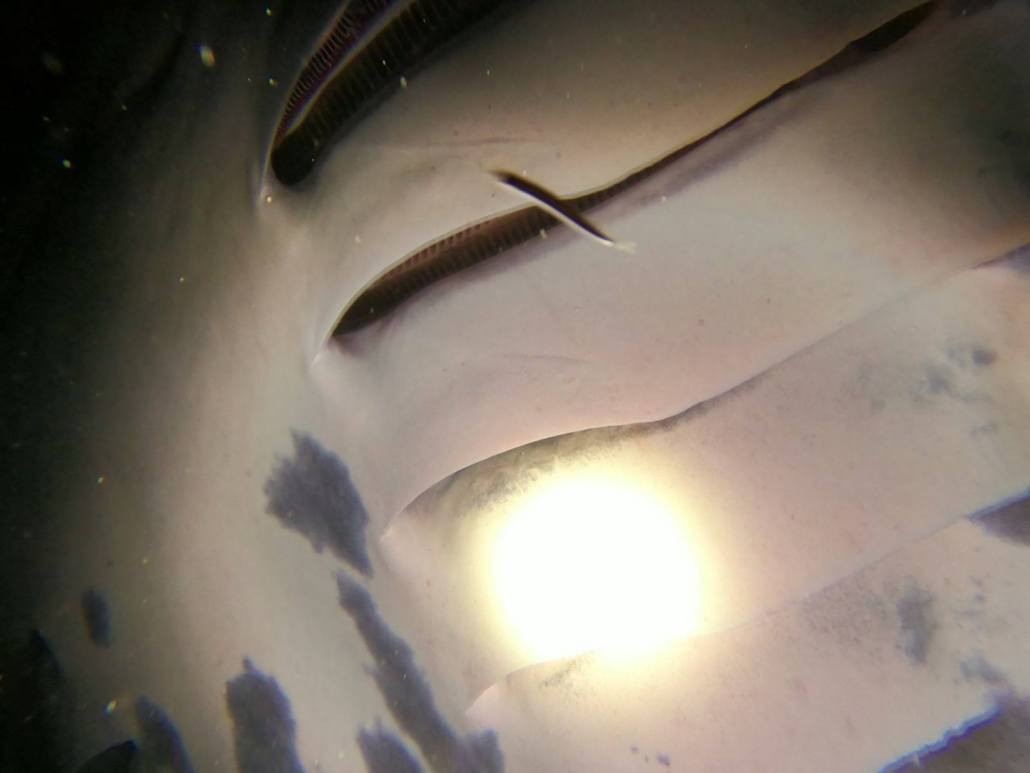
Our Inner-coastal Manta Rays are known to live between the areas of Captain Cook and Waikoloa, safely roaming our Golden Kona Coast. They don’t travel to other islands. Www.MantaPacific.org is our favorite resource where almost 300 of our Kona Manta Rays have been identified and named. When filming, try to get a picture of the manta’s belly. If it hasn’t been identified yet…. You get to name a Manta Ray! Pretty cool! Just ask DarthRaydar.
Behavior:
Manta Rays have the largest BRAINS of all fish being the first fish thought to be able to recognize itself. Studies of the manta ray brain suggest manta rays are fish in the shark family with well-developed sensory cognitive abilities and strong social behaviors.
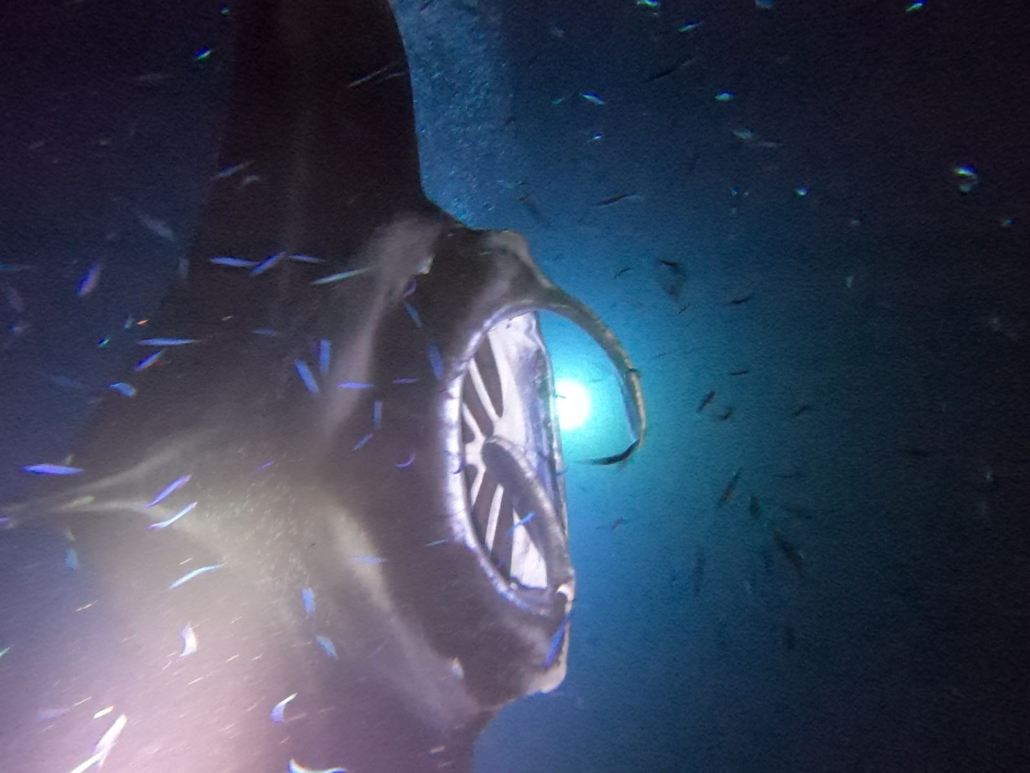
Manta Rays EAT plankton exclusively, and they are strictly a filter feeder eating Phytoplankton (microscopic, photosynthetic plankton) and Zoa Plankton (larger plankton, often the larval forms of animals like crabs and sea stars). They graze 75% of their lives and eat 25% of their body weight daily. Their mouths could swallow you whole, but their throat is the size of a quarter and would never get you down. Mantas have No teeth, no stinger, no barb- the Manta Ray literally cannot hurt you. You are SAFE! Manta Rays also have No natural predators. The Manta Ray is also safe, except from the dangers of us.
COLOR:
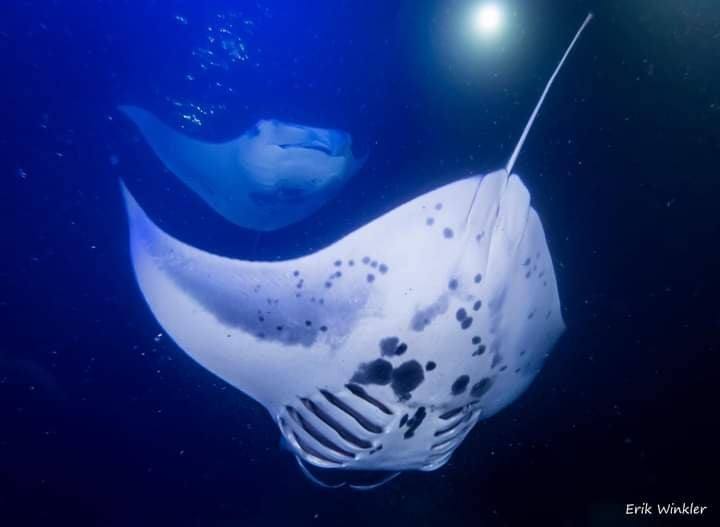
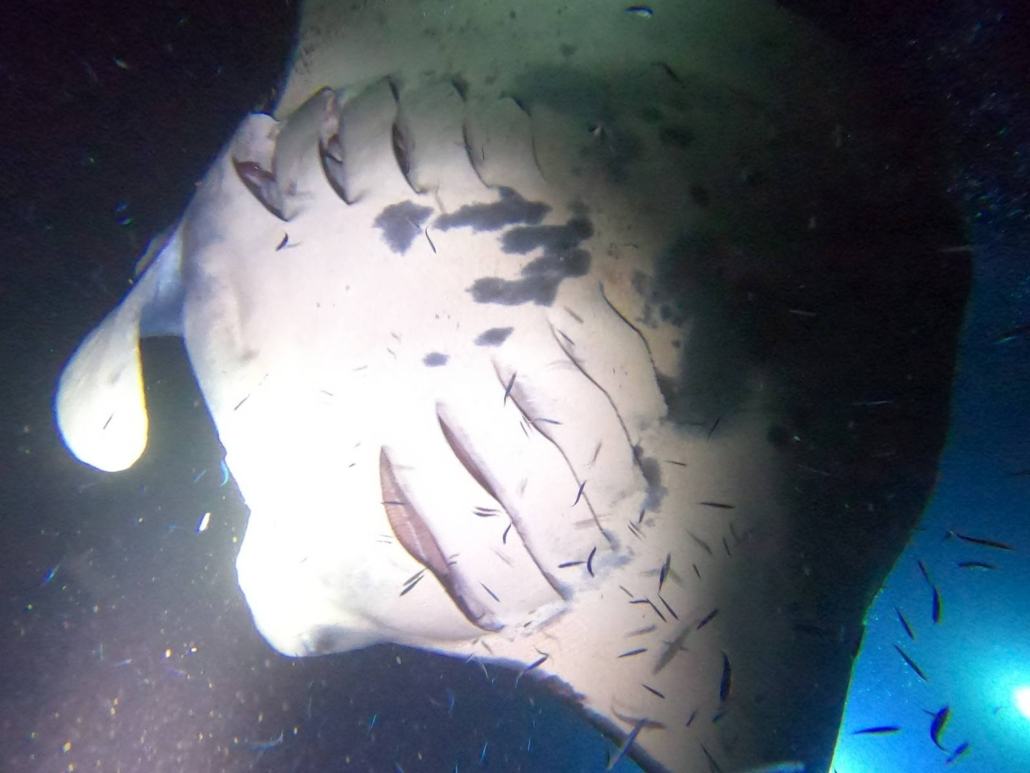
Manta ray backs or Dorsal sides are typically black and grey. Their bellies or ventral sides are white with spots that serve as UNIQUE IDENTIFIERS much like the human thumbprint.
SIZE:
7-10’ is the average wingspan, weighing 100 pounds per foot. Our biggest documented Manta Ray here is Kona is Biggest Bertha with a 16’ wingspan.
BIRTH CYCLE:
When a female manta ray is ready to mate she will do what we call a Manta Train. She will perform a type of dance. Several males will follow her trying to copy her perfectly. The one who wins her over will be the one She chooses to mate with. She will have a live birth after a 13 months gestation period. She will fly out of the water and smack her belly down on the water surface to break the live egg sack and a baby manta burrito will drop, and unwrap itself, and fly away. It’s Bye-bye Baby Baby right then and there. Mantas generally only have one offspring at a time and only every couple of years.
MANTA in Spanish means Blanket.
Salty Swim School, LLC
Our experienced, licensed, insured, certified coaches can’t wait to get in the ocean with YOU for an unforgettable swimming experience.
We teach swimming in the Ocean to ALL AGES.